
Before we dive deep, this shift is a crucial part of what we discussed in our broader guide on [The Ultimate AI Revolution 2026]
The world of artificial intelligence (AI) is currently at a pivotal stage. Over the past few years, we have been consistently amazed by the conversational capabilities of large language models (LLMs) such as ChatGPT (OpenAI), Google Gemini (Bard), Claude (Anthropic), Microsoft Copilot, Perplexity AI, Grok (xAI – Elon Musk), DeepSeek, Pi AI, Replika, and Character.AI. However, the spotlight is shifting. Conversation is no longer just about “chat”—it’s about “action.”
We are transitioning from AI that answers our questions and performs complex tasks to something else. This paradigm shift is called agentic AI.
Let’s explore together in this comprehensive guide what Agentic AI is, how it works, how we can utilize it in our work, and why it is considered the “next big thing” in technological evolution.
1. What is Agentic AI? (Defining the Shift)
To better understand Agentic AI, we first need to differentiate between reactive and proactive systems.
- Generative AI (reactive): If you ask, “Write a formal leave application for me,” the AI will write and provide the text to you within just a few seconds. It waits for your input to generate the output.
- Agentic AI (Proactive): If you say, “I’m very sick; so please cancel my meeting for tomorrow and inform my team,” the AI doesn’t just write a draft. It accesses your calendar, identifies the participants, drafts personalized emails, and sends them to the specific members of your team.
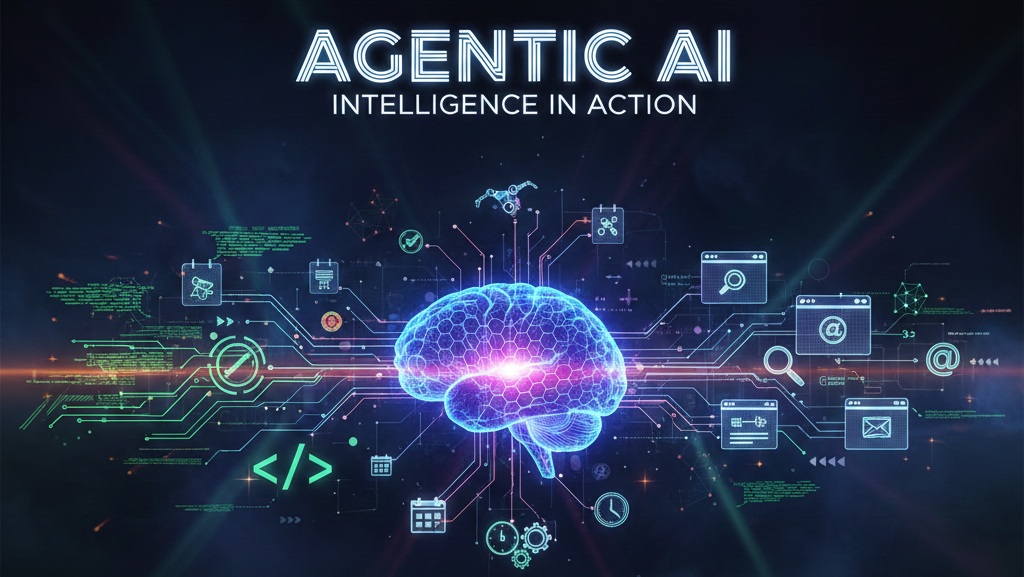
Agentic AI refers to autonomous systems that can perceive a goal, create a multi-step plan, use external tools, and execute the task from start to finish with minimal human intervention.
2. Key Characteristics of AI Agents
What sets an Agentic system apart from a standard chatbot?
- Autonomy: It makes independent decisions on how to achieve a goal without needing step-by-step prompts.
- Reasoning and Planning: It breaks down complex objectives into smaller, manageable sub-tasks.
- Tool Use: It can interact with the physical and digital world—browsing the web, running code, using APIs, or managing software like Excel and Slack.
- Memory & Learning: It retains context from previous steps, learning from errors to self-correct during the process.
- Multimodality: Modern AI agents can understand and process not only text, but also images (vision), audio, and video simultaneously. As a result, they can perform more complex tasks with greater accuracy.
- Proactivity: A typical chatbot only answers your questions, but an AI agent takes initiative on its own. For example, after a task is completed, it will automatically send you a notification or provide suggestions for the next step.
- Multi-agent Collaboration: One of the key features of a powerful agent system is its ability to communicate with other AI agents. For example, one agent might be conducting research while another agent is writing a report based on that research—they can share data with each other.
- Personalization: Through long-term use, the agent understands the user’s preferences, work style, and needs, and provides services accordingly.
3. The Architecture: How Agentic AI Thinks?
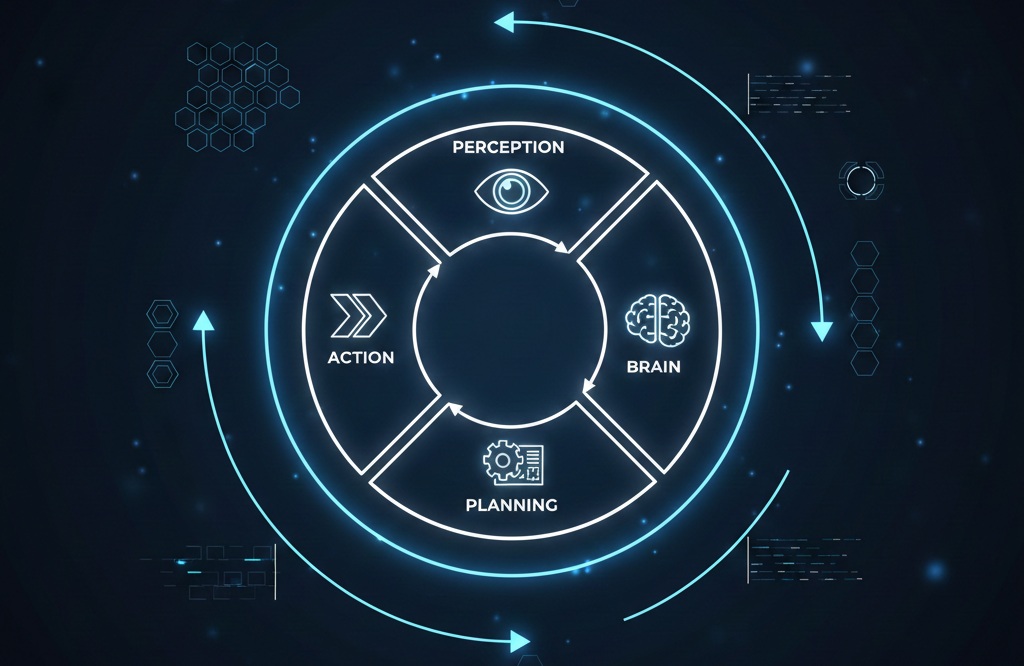
The workflow of an AI agent can generally be divided into four primary pillars, such as:
- Perception: The Agent analyzes the user’s request and the environment.
- Brain (The LLM): This is the core reasoning engine (e.g., GPT-4o, Claude 3.5 Sonnet) that processes logic.
- Planning: The Agent creates a “Chain of Thought” or a roadmap to reach the destination.
- Action & Feedback: The Agent executes a step. If it fails, it analyzes the feedback, adjusts its plan, and tries again—a process known as Self-Correction.
4. Agentic AI vs. Generative AI: A Quick Comparison
| Feature | Generative AI | Agentic AI |
| Primary Output | Content (Text, Image, Code) | Task Execution (Actions) |
| Dependency | High (Relies on constant prompts) | Low (Operates on high-level goals) |
| Workflow | Input → Output | Input → Planning → Execution → Result |
| Example | Summarizing an article | Managing an entire sales pipeline |
5. Real-World Use Cases
Agentic AI is already revolutionizing various industries, from small to large:
- Software Engineering: Tools like Devin or OpenDevin can write code, debug software, and deploy applications autonomously.
- Customer Support: Moving beyond FAQs, AI agents can now process refunds, track shipments, and troubleshoot technical issues by accessing internal databases.
- Business Intelligence: Instead of just visualizing data, an agent can find a trend, research competitor moves, and draft a strategy report.
- Hyper-Personalized Productivity: From booking flights, trains, buses, launches, and hotels to creating or ordering your grocery list based on your diet, AI agents act as true digital concierges.
6. Challenges and Ethical Considerations
Just as great power comes with great responsibility, the rise of agentic AI brings with it new risks:
- Unpredictability: Autonomous agents can sometimes enter “infinite loops” or hallucinate incorrect actions.
- Security: Giving AI access to your email or bank accounts requires “Bank-Grade” security and strict permissions.
- Ethical Accountability: If an AI makes a financial or legal error, who is responsible?
- Job Market Shifts: As AI handles execution, the demand for “Doers” may shift toward “Strategists” and “Orchestrators.”
7. The Future: Multi-Agent Systems (MAS)
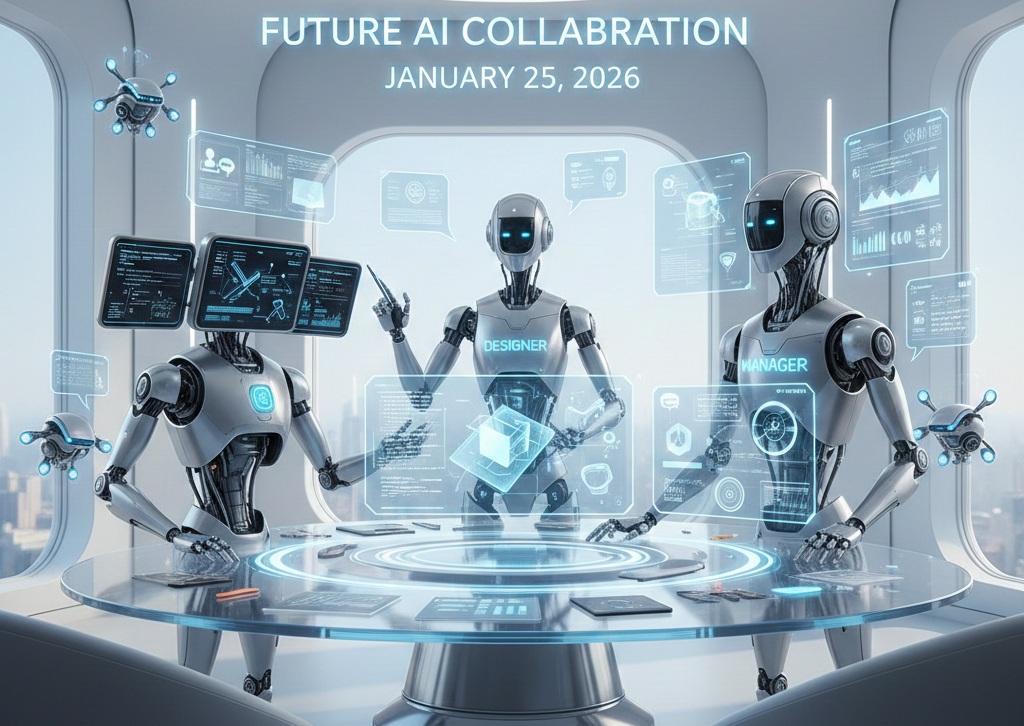
The next step is Multi-Agent Collaboration. Imagine a “Company in a Box”:
- A Designer Agent creates a UI mock-up.
- A Developer Agent writes the code.
- A QA Agent tests it for bugs.
- A Manager Agent oversees the timeline.
This collaboration will allow humans to focus on high-level creativity and strategy while the “AI workforce” handles the heavy lifting.
8. How to Get Started with Agentic AI
If you are a developer or a tech enthusiast, you can explore these frameworks:
- CrewAI: The leading framework for orchestrating Multi-Agent systems.
- LangGraph / LangChain: The industry standard for building complex AI workflows.
- AutoGPT & BabyAGI: The pioneers of autonomous task management.
Conclusion
Agentic AI is not just a buzzword; it is the realization of a core promise of artificial intelligence. We are entering an era where AI is not merely a tool, but a collaborative partner. As these agents become increasingly integrated into our lives, the question is not just what AI can say, but what it can achieve and what we can accomplish with it.